Understanding business overhead costs is essential for your operations. These are the indirect expenses, like rent and utilities, that keep your business running. You can identify these costs by reviewing your financial statements and categorizing them into fixed and variable expenses. By managing overhead effectively, you can improve profitability and make informed pricing decisions. Next, let’s explore how you can calculate these costs and implement strategies to optimize them.
Key Takeaways
- Business overhead costs are indirect expenses, essential for operations, including rent, utilities, and administrative expenses.
- They are categorized into fixed, variable, and semi-variable costs, impacting budgeting and financial planning.
- Understanding these costs aids in determining profitability and influences pricing strategies for competitiveness.
- Regular reviews of overhead can identify inefficiencies, leading to potential cost savings and improved financial health.
- Effective overhead management fosters sustainability and a culture of cost awareness, ensuring long-term business stability.
Understanding Business Overhead Costs
Understanding business overhead costs is essential for every entrepreneur. These costs include indirect expenses necessary for running your business, like rent and utilities, which you can’t directly tie to specific products or services.
You can categorize these costs into fixed and variable types. Fixed costs, such as salaries, stay the same no matter how much you sell, while variable costs, like utilities, change based on your activity levels.
To manage these business overhead costs effectively, regularly review your expenses. This helps you identify areas where you can cut back, enhancing efficiency and resource allocation.
Accurate budgeting and financial planning hinge on understanding these costs, impacting your pricing strategies and overall sustainability. By keeping a close eye on overhead, you can maintain profitability without alienating customers with high prices.
Take action now to analyze your overhead and make adjustments that could benefit your bottom line.
The Role of Overhead in Driving Profitability

While you may focus on revenue generation, overhead costs play an essential role in determining your business’s profitability. Understanding your overhead rate is vital; it helps you calculate net income accurately. High overhead can force you to raise prices, making your offerings less competitive.
To avoid this, regularly review and adjust your overhead costs. Look for inefficiencies that can lead to unnecessary expenses, and cut those to improve your profit margins.
Additionally, consider using methods like Activity-Based Costing (ABC) to allocate overhead accurately. This approach will give you clearer insights into which products or services contribute most to your profitability.
Common Types of Overhead Costs Explained

When you manage your business, it’s essential to understand the common types of overhead costs that can impact your bottom line.
Start by tracking your rent and utility expenses, as these can be significant fixed costs.
Next, break down your administrative expenses, including insurance and legal fees, to identify where you can streamline and save money.
Rent and Utilities Costs
Rent and utilities costs play a significant role in your business’s overall overhead, affecting both your budget and profitability.
Rent is a fixed overhead cost, remaining constant regardless of your business activity, often becoming one of your largest expenses. On the other hand, utilities include electricity, water, and gas, which can fluctuate based on usage, making them semi-variable overhead costs.
To maintain profitability, you need to budget for these expenses carefully, as high overhead can limit funds for growth. Consider negotiating long-term leases to lock in rental costs, but weigh this against potential changes in your operational needs.
Regularly review your utility usage to identify areas for savings, ensuring you manage these overhead costs effectively.
Administrative Expenses Breakdown
Administrative expenses often make up a significant portion of your business’s overhead costs, impacting your bottom line directly. Understanding the administrative expenses breakdown can help you manage costs effectively. Here’s a quick overview of common types:
| Type | Examples | Impact on Costs |
|---|---|---|
| Salaries | Management, HR | Largest expense |
| Office Supplies | Paper, pens, printers | Regularly recurring cost |
| Utilities | Electricity, water, internet | Essential for operations |
To calculate overhead cost, sum these expenses and divide by total sales. Effective management of these costs guarantees competitive pricing and supports your business’s financial health. Prioritize tracking, review regularly, and make adjustments to maintain efficiency.
Insurance and Legal Fees
Insurance and legal fees represent an essential component of your business’s overhead costs, as they shield you from potential risks and guarantee compliance with regulations.
To manage these overhead costs effectively, consider the following:
- Insurance Costs: Invest in liability and property coverage to protect against financial risks; these can range from thousands annually.
- Legal Fees: Budget for attorney services, with small businesses spending around $1,000 to $5,000 each year.
- Regulatory Compliance: Factor in costs for necessary licenses and permits, which can vary considerably based on your industry.
- Employee Training: Allocate funds for ongoing training, averaging $1,200 per employee for compliance-related education.
How to Identify and Categorize Overhead Costs
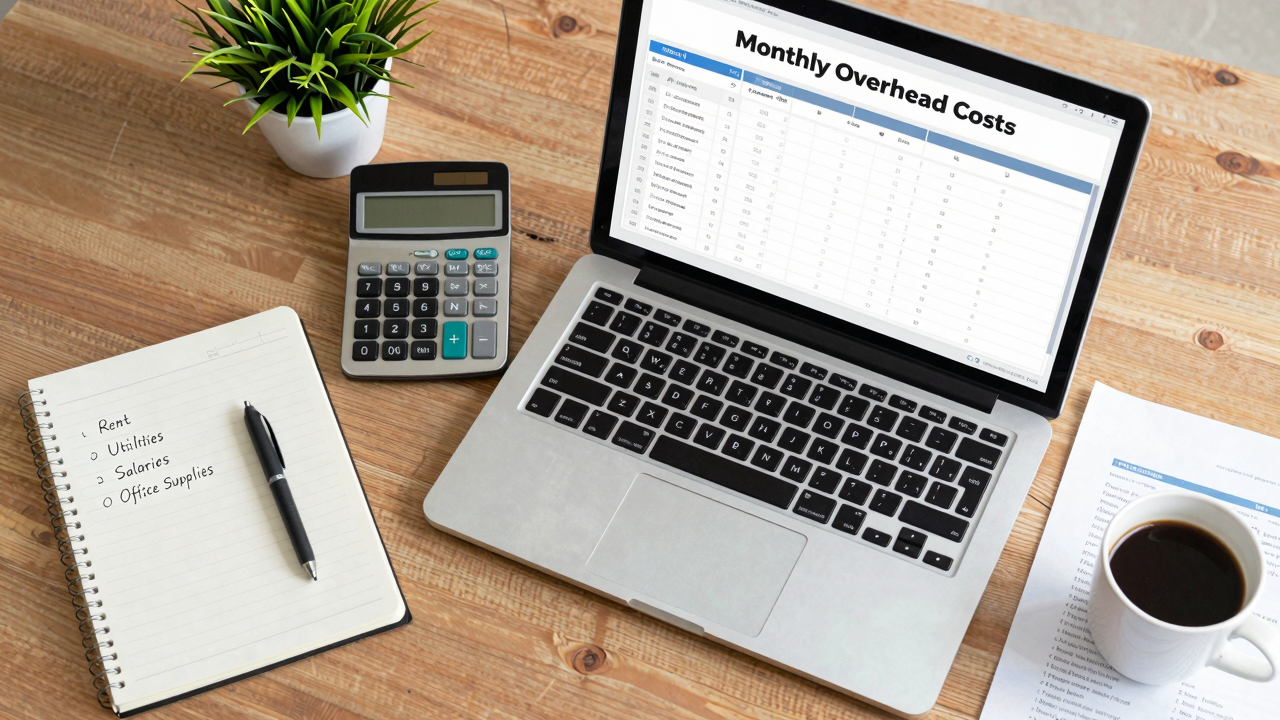
To effectively identify and categorize your overhead costs, start by listing your fixed expenses, like rent and salaries, which stay the same each month.
Next, track your variable costs, such as utilities, that change with your business activity.
Finally, don’t forget to assess semi-variable costs, which may have both fixed and variable components, to get a complete picture of your overhead.
Identifying Fixed Costs
Identifying fixed costs is essential for managing your business’s finances effectively, especially since these expenses remain constant regardless of your sales or production levels.
Here’s how to determine overhead cost:
- Review Financial Statements: Look for expenses that haven’t fluctuated with sales, like rent or salaries.
- List Necessary Expenses: Identify costs crucial for operations, such as insurance and property taxes.
- Check Long-term Commitments: Include long-term leases or loans that require regular payments.
- Monitor Depreciation: Calculate equipment depreciation, as it’s a fixed cost that impacts your budget.
Recognizing Variable Expenses
Recognizing variable expenses is essential for managing your business’s budget effectively, especially since these costs can shift with changes in production or sales.
To identify variable overhead costs, look at expenses that fluctuate directly with your business volume. Focus on items like shipping fees, sales commissions, and packaging materials, which vary as your output changes.
It’s vital to differentiate these from fixed commitments, such as rent or salaried positions. Regularly review these variable overhead costs to spot opportunities for cost reduction and efficiency improvements.
This practice not only helps you adapt to market demand but also enhances your overall profitability by allowing you to make informed budgeting and pricing decisions.
Categorizing Semi-Variable Costs
Understanding semi-variable costs is key to managing your business’s overhead effectively. These mixed costs contain both fixed and variable components, making accurate overhead computation essential.
To categorize these costs, follow these steps:
- Identify fixed components: Determine which expenses remain constant, like a base utility charge.
- Analyze variable components: Look for parts that fluctuate, such as usage-based fees.
- Track employee compensation: Recognize salaries that include base pay plus commissions.
- Review usage patterns regularly: Adjust your budgeting based on how costs change with operational levels.
How to Easily Calculate Your Overhead Costs
Calculating your overhead costs doesn’t have to be complicated. Start by summing all your indirect expenses, like rent, utilities, and administrative salaries, for a specific period. This total gives you your overall overhead costs.
Next, to find out how to calculate overhead cost per unit, divide your total overhead by a chosen allocation base, such as total direct labor costs or total sales. This ratio helps you understand your cost efficiency.
Make it a habit to regularly track and categorize these expenses, as this can reveal trends and potential savings. Using accounting software can automate this process, making it easier to analyze how overhead impacts your profitability.
Finally, conduct periodic reviews of your costs to adapt to seasonal changes, ensuring you maintain a clear view of your financial health. By following these steps, you can manage your overhead effectively, enhancing your business’s sustainability.
Strategies for Managing Overhead
Managing overhead costs effectively is key to maintaining your business’s financial health. To optimize your overhead percentage and enhance budgeting, consider these practical strategies:
- Categorize Costs: Regularly review and classify overhead costs into fixed, variable, and semi-variable to spot savings opportunities.
- Negotiate with Suppliers: Implement negotiation strategies annually, securing better rates on contracts to reduce ongoing expenses.
- Leverage Technology: Utilize automation and technology to streamline administrative tasks, lowering labor costs and boosting efficiency.
- Encourage Cost Awareness: Foster a culture among employees that promotes identifying wasteful practices and suggesting improvements.
How Overhead Costs Affect Pricing Strategies

Overhead costs play an essential role in shaping your pricing strategies, as they directly affect your profit margins and competitiveness. You need to know how to calculate overhead rate to guarantee these costs are factored into your pricing. A high overhead rate can force you to raise product prices, which might push you out of the competitive market.
By accurately calculating your overhead, you can adopt cost-plus pricing strategies, ensuring all expenses are covered while meeting your profit goals. Understanding how your overhead costs are distributed allows you to implement competitive pricing strategies that align with market conditions.
Regularly analyzing these costs enables you to adjust your pricing in response to changes in operational expenses, keeping your business agile. For instance, if utility costs rise, reevaluating your pricing can help maintain profitability without losing customers.
Keep an eye on these costs, and you’ll enhance your pricing strategy effectively.
When and How to Review Your Overhead Costs?
Reviewing your overhead costs regularly is key to maintaining your business’s financial health. Here’s how to find total overhead cost and when to review:
- Monthly for Variable Expenses: Track costs like utilities and materials, adjusting as needed.
- Quarterly for Fixed Costs: Review rent and salaries to verify they align with your budget.
- Annual Thorough Audit: Conduct a thorough examination to identify low-return expenses and negotiate better terms with suppliers.
- Engage Employees: Involve your team in spotting inefficiencies, fostering a culture of cost awareness.
To streamline this process, consider using accounting software. It can help you spot trends easily, making your reviews more efficient.
Frequently Asked Questions

What Are the 4 Types of Overhead?
The four types of overhead are fixed, variable, semi-variable, and administrative.
Fixed overhead remains constant, like rent and salaries.
Variable overhead changes with business activity, such as commissions.
Semi-variable has both fixed and variable parts, like utility bills that have a base rate plus usage charges.
Administrative overhead includes daily expenses, like office supplies and management salaries, which support operations but aren’t tied to production directly.
Understanding these helps you manage costs effectively.
What Are the Overhead Costs of a Business?
Overhead costs in a business include rent for your workspace, utility bills, office supplies, and salaries for administrative staff.
To manage these effectively, categorize them into fixed, variable, and semi-variable costs. Regularly review these expenses to spot areas for cuts or improvements.
https://www.youtube.com/watch?v=2-a4aUkNEr4
For instance, consider switching utility providers or negotiating rent.
Why Are Overhead Costs Important?
Overhead costs are essential because they directly impact your business’s profitability and pricing strategies.
By keeping these expenses in check, you can improve operational efficiency and identify cost-saving opportunities. Regularly review your overhead to see where you can cut back, ensuring you stay competitive without sacrificing quality.
Monitor these costs closely to make informed pricing decisions, helping you cover expenses while attracting and retaining customers effectively.
What Does 20% Overhead Mean?
A 20% overhead means that for every dollar you spend directly on production, you add an extra 20 cents to cover indirect costs like rent and utilities.
To manage this effectively, calculate your total direct costs, then multiply by 0.20 to find your overhead.
Use this information when pricing your products or services, ensuring you cover all expenses.
Regularly review this percentage against industry standards to identify areas for improvement.
Conclusion

To conclude, understanding and managing your business overhead costs is essential for long-term success. Regularly review your expenses, categorize them, and calculate your overhead to gain insights. Utilize strategies like negotiating better rates or adopting energy-efficient practices to cut costs. This not only improves profitability but also enhances your pricing strategies. Stay proactive—set a schedule to reassess your overhead costs regularly, ensuring you adapt to changes and maintain competitiveness in your market.
Image via Google Gemini and Small Business Trends
This article, “What Are Business Overhead Costs and Their Importance?” was first published on Small Business Trends