Maneuvering heavy equipment financing can be complex, but grasping a few key strategies can make the process smoother. First, it’s vital to assess your financial health and maintain a strong credit score, as this can greatly affect your financing options. Next, preparing an extensive business plan is important, outlining your growth projections and repayment strategy. By following these guidelines, you can set yourself up for success, but there are more significant factors to reflect upon.
Key Takeaways
- Clean your credit profile to ensure a strong credit score, improving your chances for favorable financing terms.
- Compare multiple lenders to find the best rates and financing structures suited to your needs.
- Evaluate the total cost of ownership, including all financing expenses and potential tax benefits, before committing.
- Align financing terms with your business cash flow and revenue cycles to ensure manageable repayments.
- Prepare a comprehensive business plan with financial projections to instill lender confidence and demonstrate your industry expertise.
Assessing Your Financial Health

How well do you really understand your company’s financial health? To successfully navigate heavy equipment financing, you’ll want to assess your credit score first. A higher score often leads to better financing options and terms, whereas a lower score could limit your choices.
Next, review your cash flow statements to confirm you have enough liquidity for monthly payments associated with heavy equipment leasing. Keeping accurate financial records, including income statements and balance sheets, is essential for presenting a clear picture of your financial health to lenders.
Be prepared to demonstrate your ability to repay loans by showcasing consistent revenue streams and profitable operations over time. Finally, understand that your overall financial stability directly influences financing approval. Lenders typically evaluate your financial history, so maintaining a strong financial profile will improve your chances for heavy construction equipment leasing and financing opportunities.
Understanding Your Financing Options
Once you’ve evaluated your company’s financial health, it’s time to explore the various financing options available for heavy equipment. Comprehending these options can help you choose the best path for your needs.
Here are three primary financing methods to contemplate:
- Equipment Loans: These allow you to purchase machinery, giving you ownership once the loan is fully repaid. This option is beneficial if you plan to use the equipment long-term.
- Leases: Leasing offers lower upfront costs and allows you to use equipment without ownership at term end. It’s ideal for businesses needing flexibility.
- Vendor Financing: This option involves in-house lending solutions from equipment manufacturers, simplifying the financing process.
Additionally, contemplate government-backed programs like SBA loans for longer terms, or alternative lenders for quicker approvals.
Always analyze the total cost of ownership, including financing expenses and potential tax benefits, to make informed decisions.
Preparing a Comprehensive Business Plan
When you’re preparing a detailed business plan for heavy equipment financing, it’s crucial to clearly articulate how the new machinery will improve your operations and drive profitability.
Start by outlining growth projections that detail how this acquisition will boost productivity and, in the end, your bottom line. Be sure to include specific financial projections that demonstrate anticipated revenue growth and cash flow improvements resulting from the equipment.
Highlight the intended use of the machinery and how it aligns with your operational needs, considering factors like work cycles and seasonal demands.
Furthermore, incorporate a repayment strategy that outlines how your business will manage loan obligations, addressing potential challenges and solutions for timely payments.
Finally, present a thorough comprehension of industry-specific factors, such as competitive bidding implications and project timelines, to instill confidence in lenders about your preparedness and expertise.
This detailed approach will improve your chances of securing financing.
Assembling a Strong Financial Profile
A strong financial profile is essential for securing heavy equipment financing, and there are several key elements to evaluate. By focusing on these aspects, you can improve your attractiveness to lenders and increase your chances of approval.
- Accurate Financial Records: Maintain updated income statements and balance sheets to present a clear view of your financial health.
- Consistent Profitability: Show evidence of ongoing profitability and positive cash flow, which signals reliability and stability to lenders.
- Industry Expertise: Demonstrate your experience in the industry, as lenders prefer businesses with a proven track record in their specific field.
Tips for Securing Favorable Financing Terms
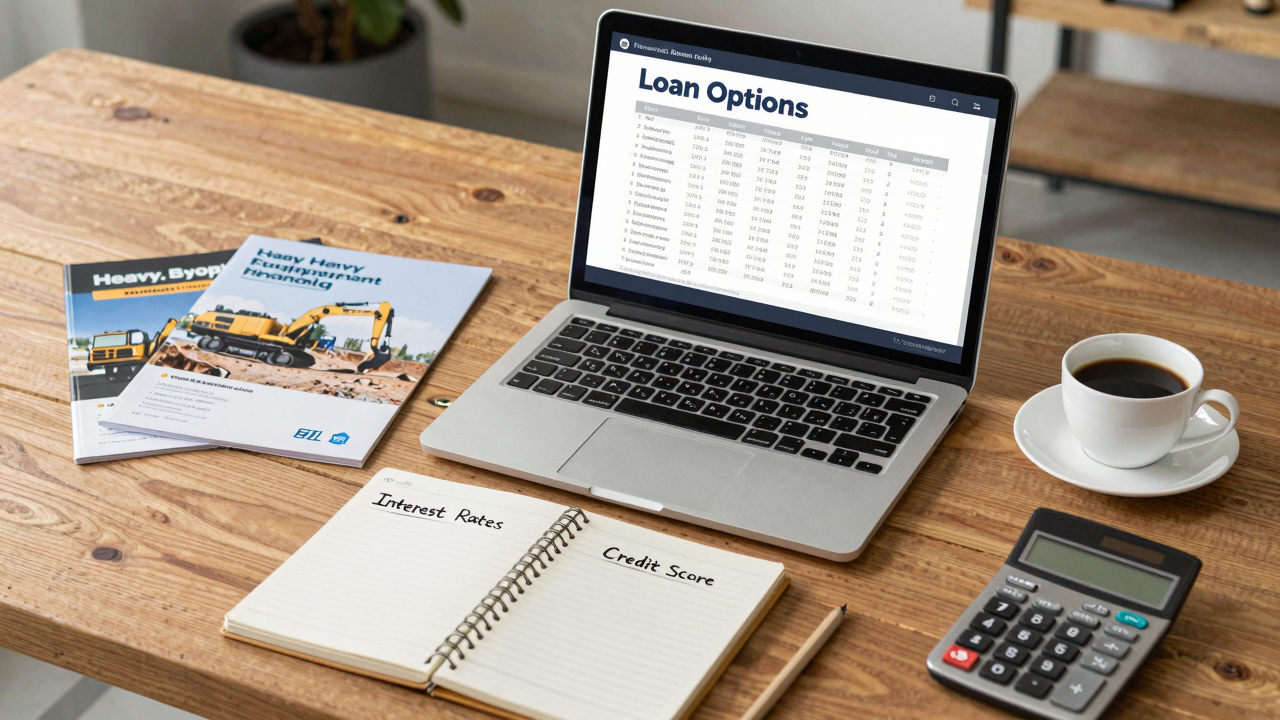
How can you secure the most favorable financing terms for your heavy equipment purchase? Start by cleaning up your credit profile. A strong credit score can lead to lower interest rates and better financing options, so make certain it’s in good shape before applying.
Next, compare multiple lenders to find the best rates and structures available in the market. Furthermore, evaluate the total cost of ownership, including insurance and potential fees, to guarantee it aligns with your budget.
It’s wise to match financing terms with your business cash flow and revenue cycles, which can ease payment processes. Finally, don’t hesitate to negotiate financing terms, especially if you’re a repeat customer or plan to buy multiple pieces of equipment. This approach can often yield more favorable conditions and rates, ultimately benefiting your financial situation.
Frequently Asked Questions
What Types of Heavy Equipment Can I Finance?
You can finance various types of heavy equipment, including excavators, bulldozers, backhoes, and forklifts.
Financing options likewise extend to loaders, cranes, and dump trucks. Typically, lenders consider the equipment’s value, age, and condition.
It’s essential to evaluate your specific needs and budget before deciding. By comprehending your financing options, you can select the right equipment for your projects during ensuring manageable monthly payments that fit your financial situation.
How Does My Industry Impact Financing Options?
Your industry considerably influences your financing options. Lenders assess the stability and growth potential of your sector, affecting interest rates and terms.
For instance, construction may offer more favorable conditions than agriculture, because of demand fluctuations.
Furthermore, industries with higher risk profiles might face stricter requirements, whereas those with steady cash flow may secure better deals.
Comprehending your industry’s impact helps you navigate financing choices effectively, ensuring you select the best options for your needs.
Can I Finance Used Equipment?
Yes, you can finance used equipment. Lenders often offer financing options for used machinery, but terms may vary based on the equipment’s age, condition, and value.
You’ll typically need to provide documentation like maintenance records and financial statements. Interest rates may be higher for used equipment compared to new, as lenders perceive more risk.
Be prepared to make a larger down payment, which could improve your financing terms and overall costs.
What Is the Typical Loan Term for Heavy Equipment?
The typical loan term for heavy equipment usually ranges from three to seven years.
Lenders often offer varying terms based on the equipment’s age and value.
Shorter terms might come with higher monthly payments but lower total interest costs, whereas longer terms can ease monthly cash flow, though they may increase overall interest.
It’s essential to assess your budget and future equipment needs when choosing the right loan term for your situation.
Are There Tax Benefits for Financing Heavy Equipment?
Yes, there are tax benefits for financing heavy equipment.
You can often deduct interest payments on equipment loans, which reduces your taxable income.
Furthermore, the Section 179 deduction allows you to write off a significant portion of the equipment’s purchase price in the year you buy it, assuming you meet specific criteria.
This can lead to substantial tax savings, making financing a more attractive option for your business’s cash flow management.
Conclusion
In conclusion, steering heavy equipment financing requires careful attention to your financial health, a solid business plan, and a strong financial profile. By comparing lenders and comprehending your financing options, you can secure favorable terms. Remember to assess the total cost of ownership and demonstrate your expertise in the industry. Following these five crucial tips will improve your chances of obtaining the best financing for your equipment needs, setting you up for long-term success in your operations.
Image via Google Gemini and Small Business Trends
This article, “5 Essential Tips for Success in Heavy Equipment Financing” was first published on Small Business Trends